
Bible reading guide
How to read the Bible: a practical place to start
Learn how to begin reading the Bible with a clear starting place, context, simple questions, and a realistic daily rhythm.
Read the Bible online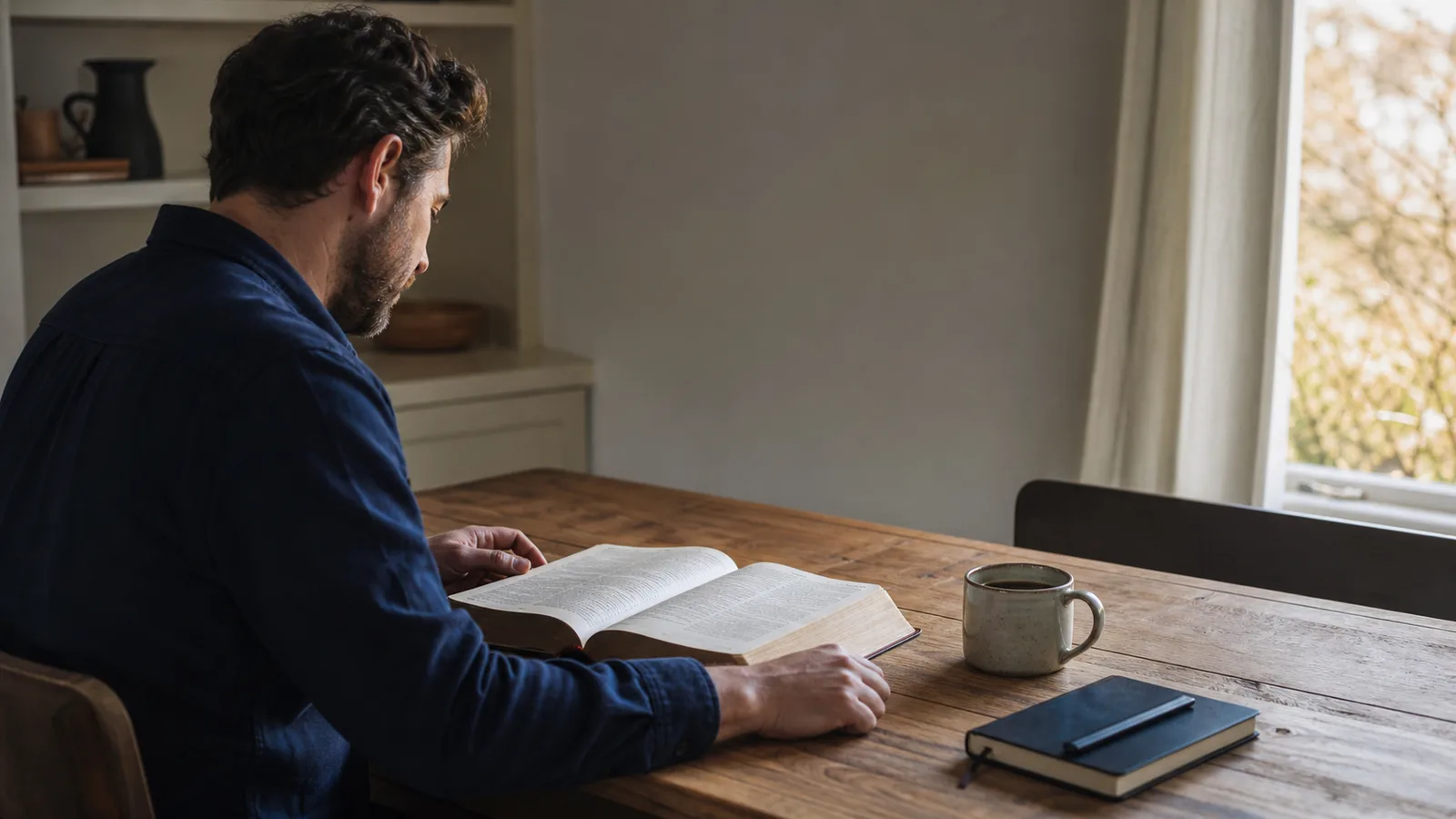
If you are asking where to read the Bible or how to begin, start with one honest aim: to understand a small passage before trying to cover a large amount. You do not need a perfect reading plan, special vocabulary, or a dramatic spiritual moment to begin. You need a real passage, a little attention, and a next step you can repeat.
Begin with a clear aim, not a perfect plan
The Bible is a library of history, poetry, wisdom, letters, prophecy, and witness. Trying to understand all of it in one sweep can make a good desire feel heavy. A better first goal is simple: read a complete thought, notice what it says, and return tomorrow.
Keep the first session short enough that you can be present. Ten attentive minutes in a passage will usually serve you better than rushing through several chapters simply to keep a number. Reading slowly is not falling behind; it is how you make space to notice the words in front of you.
Choose a starting place that gives you a story
Many new readers begin with one of the Gospels because they introduce Jesus’ life, teaching, death, and resurrection in a direct way. You might open Mark 1 for a fast-moving account or John 1 for a reflective beginning. If you want to start at the beginning of the biblical story, read Genesis 1 and continue in small sections.
There is no single required first book. The useful question is whether the passage gives you enough context to follow. Let the book’s own flow guide you instead of choosing isolated lines at random.
Read one complete thought
Before looking for a personal application, notice where the paragraph or scene starts and ends. Read the heading if your Bible provides one, then read the surrounding verses too. Ask what has happened just before this moment, who is speaking, and what changes by the end of the section.
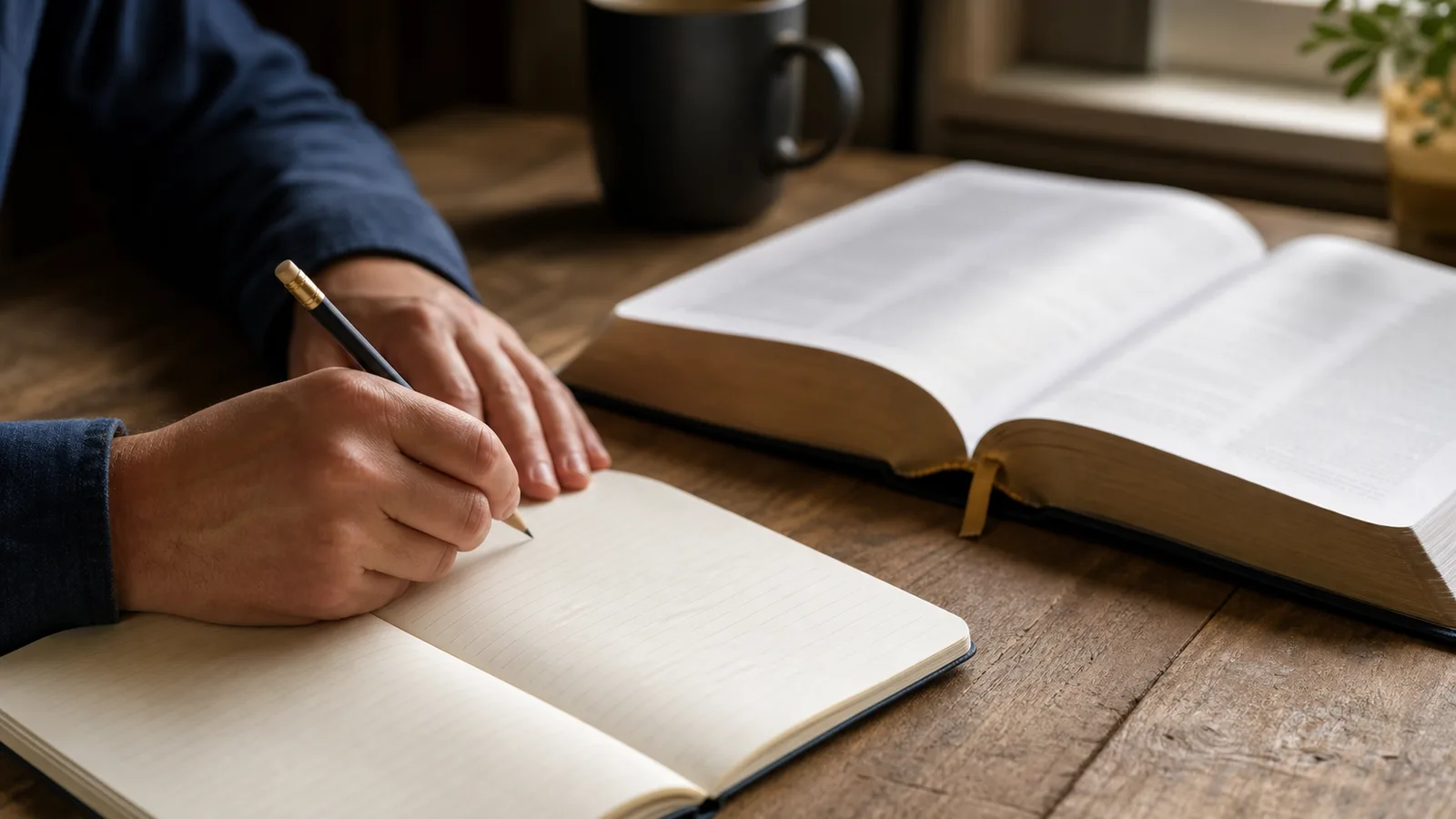
Use four questions to stay close to the text
Write a short answer, say it quietly, or keep it in mind as you read. These questions work with a chapter, a paragraph, or a short scene:
- What does this passage actually say?
- What do I learn about God, people, or the situation?
- What word, action, or question needs more attention?
- What is one honest response I can make today?
The final question is not an invitation to force every line into an immediate instruction. Sometimes the right response is gratitude, a question, a prayer, or simply returning to the passage tomorrow. Let the text set the pace.
Let a small practice become familiar
Choose a place and moment you already return to: after making tea, before your commute, or when you sit down in the evening. Keep the Bible reader open to the next passage, rather than spending every session deciding what to read. You can also compare the approved translations in DailyVrs when a phrase needs a second look.
When you miss a day, begin again without trying to compensate. Scripture reading is not a streak to protect. It is a way of returning to the Word with attention and honesty. When you are ready, continue with our guide to building a daily Bible-reading rhythm or learn what Scripture reading is.
Share this guide
Use Share to choose Snapchat or another app on your device.